Pallet Recycling & Processing
Sustainable solutions for end-of-life pallets. We transform unusable pallets into valuable materials - zero waste to landfill.
When pallets reach the end of their useful life and can no longer be repaired, they still contain tremendous value. Pallets Louisville operates a comprehensive recycling program that keeps 100% of end-of-life pallet wood out of Kentucky landfills, processing over 500 tons of wood annually into valuable products. Our advanced processing equipment breaks down damaged pallets and extracts usable materials, creating high-quality mulch, biomass fuel, animal bedding, and salvaged lumber that serve Kentucky businesses and agricultural operations.
We accept pallets in any condition—from slightly damaged pallets that aren't worth repairing to completely broken pallets that have reached true end-of-life. Our recycling services provide businesses with a responsible, environmentally sound alternative to landfill disposal while often providing payment for your unusable pallet inventory. By partnering with Pallets Louisville for recycling, you're closing the loop on your pallet lifecycle, demonstrating corporate environmental responsibility, and contributing to Kentucky's circular economy for wood materials.
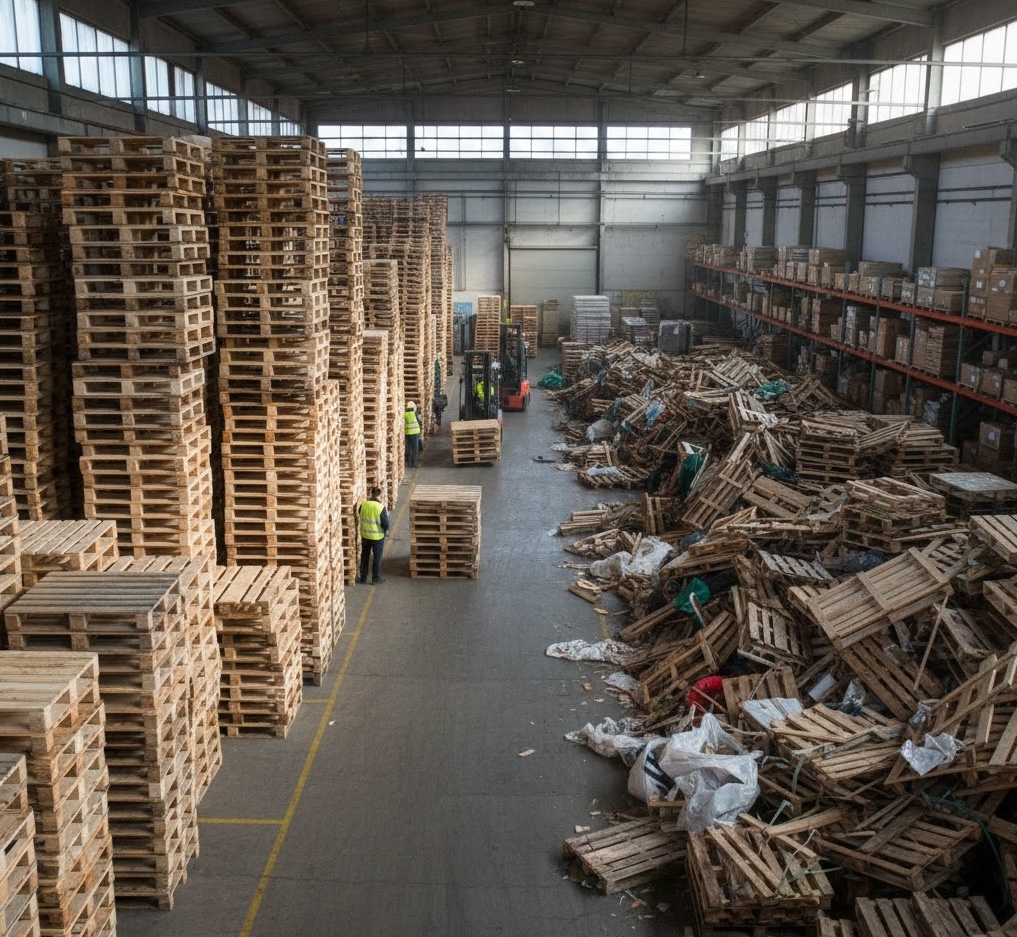
100% Diversion from Landfills
Over 500 tons of wood recycled annually into valuable products
Start Recycling Today
What Happens to Recycled Pallets
Pallet recycling is a sophisticated process that maximizes the value of wood materials while ensuring zero waste reaches landfills. When end-of-life pallets arrive at our facility, we sort them by wood type, condition, and contamination level to determine the best recycling pathway. Our industrial processing equipment then breaks down pallets, separates usable materials from metal fasteners, and produces various wood products that serve markets throughout Kentucky and neighboring states.
The beauty of pallet recycling is that every component finds a use. Hardwood lumber in decent condition can be salvaged for other wood products. Damaged boards are processed into mulch for landscaping applications. Even heavily weathered wood that can't be used for mulch becomes biomass fuel that displaces fossil fuels in energy production. Metal fasteners are separated and sent to metal recyclers. This comprehensive approach ensures that your end-of-life pallets become valuable inputs to other industries rather than landfill waste.
Premium Wood Mulch Production
The majority of recycled pallet wood becomes high-quality hardwood mulch that's sold to landscaping companies, municipalities, garden centers, and commercial property managers throughout Kentucky. Pallet wood makes excellent mulch because it's already broken down into manageable pieces, consists of hardwood species that decompose slowly and provide long-lasting coverage, and is typically free from the chemicals and treatments that contaminate some other wood waste streams.
Our processing equipment grinds pallet wood to consistent sizes suitable for landscaping applications—typically 1-3 inch pieces that provide effective weed suppression, moisture retention, and aesthetic appeal. This mulch is particularly valued for commercial landscaping projects where large volumes are needed at competitive prices. Many Kentucky landscapers specifically request pallet-sourced mulch because of its superior quality and performance characteristics compared to mulch made from construction debris or other waste wood.
Mulch Applications:
- •Commercial landscaping for offices, apartments, retail centers
- •Municipal parks, playgrounds, and public spaces
- •Residential garden centers and homeowner use
- •Erosion control on slopes and construction sites
- •Walking paths and trail surfaces
Renewable Biomass Fuel
Wood that's too damaged or weathered for mulch production becomes renewable biomass fuel—a sustainable energy source that replaces coal and other fossil fuels in industrial heating and power generation. Kentucky has several facilities that use wood biomass as a primary or supplemental fuel source, including power plants, manufacturing facilities with steam heating systems, and specialized biomass energy operations. Pallet wood is ideal for biomass applications due to its consistent moisture content and predictable BTU output.
By converting end-of-life pallets into biomass fuel, we're directly offsetting fossil fuel consumption and reducing carbon emissions. The carbon released when biomass burns was recently absorbed from the atmosphere as the tree grew, making it carbon-neutral unlike fossil fuels that release ancient sequestered carbon. Many companies pursuing carbon footprint reduction include biomass fuel utilization in their environmental strategies, and by recycling your pallets with us, you're contributing to Kentucky's renewable energy supply and reducing regional dependence on fossil fuels.
Biomass Benefits:
- •Carbon-neutral renewable energy source
- •Displaces coal and other fossil fuels
- •Supports Kentucky's renewable energy industry
- •Consistent heat value and performance
- •Reduces overall industrial carbon footprint
Agricultural Animal Bedding
Clean pallet wood that meets agricultural standards is processed into wood shavings and sawdust for animal bedding applications. Kentucky's equine industry—particularly the renowned horse farms of central Kentucky—uses enormous quantities of quality wood bedding for stalls. Dairy farms, poultry operations, and other livestock facilities also rely on wood bedding to provide clean, absorbent, comfortable surfaces for animals. Pallet-sourced bedding is highly valued because hardwood species provide excellent absorbency and odor control.
We carefully screen pallet wood destined for agricultural use to ensure it meets cleanliness and safety standards required for animal contact. Only pallets that have been used in clean, dry warehouse environments—never pallets exposed to chemicals, food contamination, or outdoor weathering—are processed into animal bedding. This selectivity ensures that Kentucky farmers and livestock operations receive bedding products they can trust for the health and comfort of their animals, while we maintain a profitable market for a portion of our recycled material stream.
Bedding Applications:
- •Horse stall bedding for Kentucky equine facilities
- •Dairy farm bedding for cow comfort and cleanliness
- •Poultry litter for chicken houses and broiler operations
- •Small animal bedding for pet stores and breeders
- •Livestock bedding for various agricultural operations
Salvaged Lumber & Raw Materials
Not all boards from end-of-life pallets are truly beyond use. Many contain sections of sound hardwood that can be salvaged and repurposed for other applications. Our processing team identifies and extracts usable lumber pieces from pallets that overall can't be repaired but contain individual boards in decent condition. This salvaged lumber finds use in numerous applications—from craft and woodworking projects to small-scale construction, furniture making, and industrial uses that don't require new lumber specifications.
The market for reclaimed and recycled wood has grown substantially as builders, craftspeople, and manufacturers recognize both the environmental and aesthetic value of reused materials. Pallet wood in particular has character and patina that new lumber lacks, making it desirable for rustic furniture, accent walls, decorative projects, and architectural elements. By salvaging usable lumber before processing the remainder into mulch or fuel, we maximize the value extracted from every pallet while supporting Kentucky's growing market for recycled building materials.
Salvaged Material Uses:
- •Craft and woodworking projects using reclaimed wood
- •Rustic furniture construction and restoration
- •Accent walls, decorative panels, and architectural features
- •Small-scale construction and repair projects
- •Industrial applications where reclaimed materials suffice
The Environmental Impact of Pallet Recycling
Pallet recycling delivers profound environmental benefits that extend far beyond simply diverting wood from landfills. By keeping wood in productive use, recycling reduces demand for virgin lumber, which means fewer trees harvested, less energy consumed in lumber manufacturing, and reduced transportation emissions. The products created from recycled pallet wood—mulch, biomass fuel, bedding—displace products that would otherwise be manufactured from new materials or fossil fuels, multiplying the environmental benefits throughout the supply chain.
Over 500 tons of pallet wood processed annually through our facility represents hundreds of thousands of board feet of lumber that never reached a landfill. This volume of wood, if landfilled, would decompose anaerobically, producing methane—a greenhouse gas 25 times more potent than carbon dioxide. By recycling instead, we prevent these methane emissions while creating products that provide environmental benefits in their own right. The cumulative impact of these choices, multiplied across thousands of pallets and years of operation, makes pallet recycling a powerful tool for environmental improvement.
Pallet wood diverted from Kentucky landfills every year
100% of pallet materials recycled into valuable products
Pioneering sustainable pallet management in Louisville
Reduced Landfill Burden
Wood constitutes a significant portion of commercial and industrial waste streams, with pallets representing a particularly large category. Kentucky landfills receive millions of pounds of wood waste annually, consuming precious landfill capacity and contributing to eventual methane production as wood decomposes. By operating comprehensive pallet recycling services, Pallets Louisville directly reduces this burden, extending the operational life of regional landfills and minimizing the environmental problems associated with wood decomposition in anaerobic landfill conditions.
For businesses, diverting pallets from landfills addresses multiple operational and regulatory concerns. Many companies face increasing landfill tipping fees, making recycling economically attractive. Some jurisdictions impose wood waste bans or restrictions that make landfilling difficult or expensive. Corporate sustainability commitments often include waste diversion targets that pallet recycling helps achieve. By choosing our recycling services, you're simultaneously solving a waste management problem, reducing disposal costs, meeting regulatory requirements, and advancing environmental goals—a comprehensive solution that benefits your business and the community.
Forest Conservation & Carbon Impact
Every board foot of recycled pallet wood that becomes mulch, fuel, or salvaged lumber reduces demand for virgin timber. While pallet manufacturing primarily uses lower-grade hardwood lumber rather than premium timber, the cumulative forest impact of the pallet industry is substantial—millions of acres of forest are harvested annually to supply the wood products industry. By extending wood fiber utilization through recycling, we reduce the pressure on forests and contribute to more sustainable forestry practices across the industry.
The carbon story of pallet recycling is similarly positive. Wood products store carbon that was absorbed from the atmosphere as trees grew. When we keep this carbon locked in productive use—whether as long-lasting mulch or quickly-burned biomass fuel that replaces fossil fuels—we avoid both the methane emissions from landfill decomposition and the carbon emissions from extracting and processing virgin materials. This carbon lifecycle analysis increasingly matters to companies tracking their carbon footprints and seeking credible ways to reduce their climate impact through supply chain decisions.
Circular Economy Principles
Pallet recycling exemplifies circular economy thinking—the idea that waste is simply a resource in the wrong place, and that smart system design can eliminate the concept of waste entirely. In our operations, nothing is wasted: wood becomes products, metal fasteners get recycled, and even dust and fines from processing serve useful purposes. This closed-loop approach creates economic value while minimizing environmental impact, demonstrating that environmental responsibility and business success can align perfectly.
For businesses, participating in this circular system enhances your own sustainability profile. When you sell or recycle end-of-life pallets with Pallets Louisville rather than landfilling them, you're closing the loop on your pallet lifecycle. You can credibly communicate this environmental stewardship to customers, stakeholders, and in sustainability reports. Many of our clients include pallet recycling statistics—tons diverted, percentage recycled—in their annual environmental reporting, using these concrete numbers to demonstrate their commitment to circular economy principles and resource conservation.
Community Environmental Leadership
Operating large-scale pallet recycling services positions Pallets Louisville as an environmental leader in the Louisville business community. We've proven that pallet management can be both profitable and environmentally exemplary, setting an example that influences how other businesses think about waste, recycling, and resource conservation. Our facility serves as a working demonstration that circular economy principles can be implemented practically in industrial operations, inspiring broader adoption of sustainable business practices across Kentucky.
This leadership role creates value for our clients as well. By partnering with a recycling provider that takes environmental responsibility seriously, you align your business with established environmental values and benefit from association with credible sustainability practices. In an era when companies face increasing scrutiny about their environmental claims, working with proven partners like Pallets Louisville provides assurance that your recycling efforts are genuine, effective, and making real environmental differences in your community.
Frequently Asked Questions
Details about pallet recycling and recovery
What happens to pallets you recycle?
We grind unusable pallets into mulch, animal bedding, biomass fuel, and reclaimed lumber products.
Do you pick up scrap pallets?
Yes, we schedule pickups for scrap pallets in Louisville and surrounding areas based on volumes.
Can we include broken or odd-sized pallets?
We accept broken, odd-sized, or mixed-condition pallets for processing and material recovery.
Do you provide recycling documentation?
We can provide recycling summaries and documentation to support sustainability reporting.
Is there a fee for pallet recycling?
Pricing depends on condition and volume; many loads are accepted at low or no cost when recoverable.